


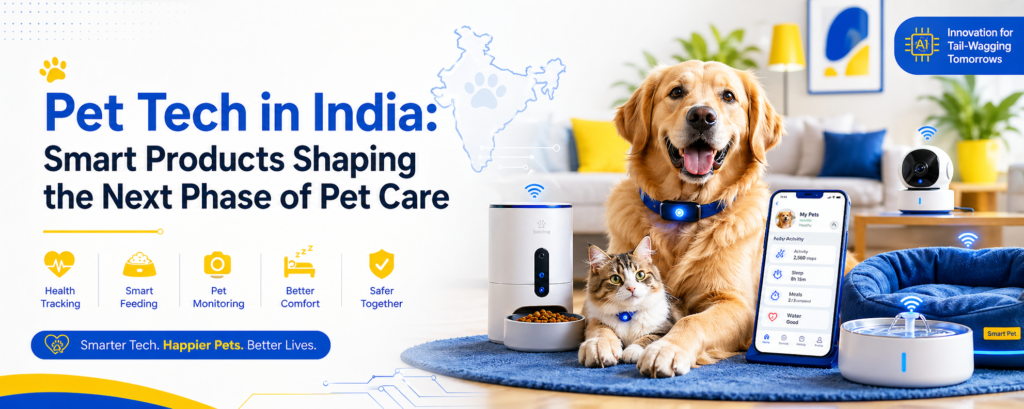
Pet care in India is becoming more digital, more connected, and more convenience-driven. Event-led content, retail platforms, and industry commentary all point toward a future where technology is not just a niche add-on but a meaningful part of the pet care ecosystem. That change is being driven by urban lifestyles, rising digital comfort, and the growing expectation that pet parenting should be easier, faster, and more personalized.
Pet tech does not only mean futuristic gadgets. It includes tele-vet access, automatic feeding, GPS tracking, digital reminders, CRM tools for businesses, smart health monitoring, and online behavior around product discovery and support. For brands, retailers, clinics, and service providers, pet tech in India is best understood as a shift in how care is delivered and experienced.
Smart products are moving from novelty to utility
At first glance, products like GPS collars, smart feeders, pet cameras, or activity trackers may look like premium novelty items. But their value becomes clearer when connected to real customer needs. Busy pet parents want visibility, convenience, and reassurance. Smart products solve emotional and practical problems: feeding on time, checking behavior while away, monitoring activity, or reducing uncertainty.
Retailers and brands should think carefully about which smart products are ready for wider Indian demand and which still serve a niche audience. Utility-led products with a clear benefit often perform better than highly experimental gadgets. When the product solves a recognizable everyday problem, customer adoption becomes easier.
Digital care is changing the meaning of convenience
One of the strongest technology shifts in pet care is not hardware. It is service access. Tele-vet support, online consultations, digital prescription flows, appointment reminders, and one-stop pet care ecosystems are changing how customers interact with care providers. This is particularly relevant in markets where physical access may be uneven or where busy urban consumers want simpler journeys.
For pet businesses, this means convenience is now part of competitive value. Customers compare not only products and prices but also how smoothly the business communicates, responds, and supports follow-up care. A brand or clinic that uses digital tools well feels more dependable because it reduces friction.
Pet tech creates opportunities for education and trust
Technology can also improve education. Apps, dashboards, reminders, symptom logging, feeding suggestions, and behavior tracking can all make customers more aware of their pet’s routine and needs. This creates opportunity for businesses willing to educate rather than only sell.
Retailers can use QR guides or digital care notes. Clinics can use reminders and post-consultation instructions. Grooming businesses can track recurring schedules. Brands can use simple digital content to explain product use and category differences. In each case, technology becomes useful not because it looks advanced, but because it makes the customer feel more informed and supported.
Pet businesses themselves are becoming more technology-led
The future of pet tech in India is not only consumer-facing. It is also operational. Billing, lead capture, vaccination records, appointment systems, inventory alerts, customer reminders, and after-sales follow-up all benefit from better digital tools. Some emerging pet-business software platforms are already targeting these pain points directly, especially for clinics, grooming salons, and stores.
This matters because customer experience is shaped by back-end organization. A business that remembers the pet’s service history, reminds the owner at the right time, and follows up consistently will feel more professional than one running entirely on memory and handwritten notes. Technology can therefore strengthen both efficiency and trust.
The challenge is relevance, not just adoption
Not every technology trend deserves equal attention. Businesses should avoid stocking or promoting tech only because it sounds modern. The real question is whether it fits Indian use cases, customer willingness, service expectations, and price sensitivity. Some customers will adopt smart devices quickly. Others will respond better to lower-tech digital convenience such as reminders, online support, or easier reordering.
That is why relevance matters more than hype. The right pet tech strategy connects a clear pain point with a realistic solution. The best businesses in this space will not necessarily sell the most advanced technology. They will sell or use the most useful technology.
Events and demonstrations will help the category grow
Pet tech benefits from in-person explanation because many customers still need to see how products work. Trade fairs, retail demos, clinic-led education, and category events can all help adoption by translating complex products into understandable benefits. For businesses exploring pet tech, live demonstration is often more effective than static promotion. IIPTF organizes India’s largest B2B trade fair
to help pet businesses to explore new technology, exclusive products, build network and grow their business every year.
This is especially true for products that combine physical features with app-based value. Customers need to understand setup, compatibility, and daily use. When explained well, these products can move from “interesting” to “worth buying.”
Conclusion
Pet tech in India is not just about gadgets. It is about a broader shift toward connected care, easier routines, better data, and more responsive businesses. The most promising opportunities lie where technology improves real-world pet parenting and real-world business operations.
For brands and service providers, the lesson is simple: follow utility, not noise. When technology helps customers care better or helps businesses serve better, it becomes part of the next growth phase of Indian pet care.
FAQs
Is pet tech in India only for premium consumers?
Not entirely. While some products are premium-led, many digital conveniences such as reminders, tele-support, and better follow-up have broad relevance.
What should retailers prioritize in pet tech?
They should prioritize products with a clear use case, understandable value, and a support story that customers can trust.
Can smaller pet businesses benefit from technology too?
Yes. Even simple tools such as CRM systems, reminder flows, or digital catalogues can improve operations and customer retention.
