

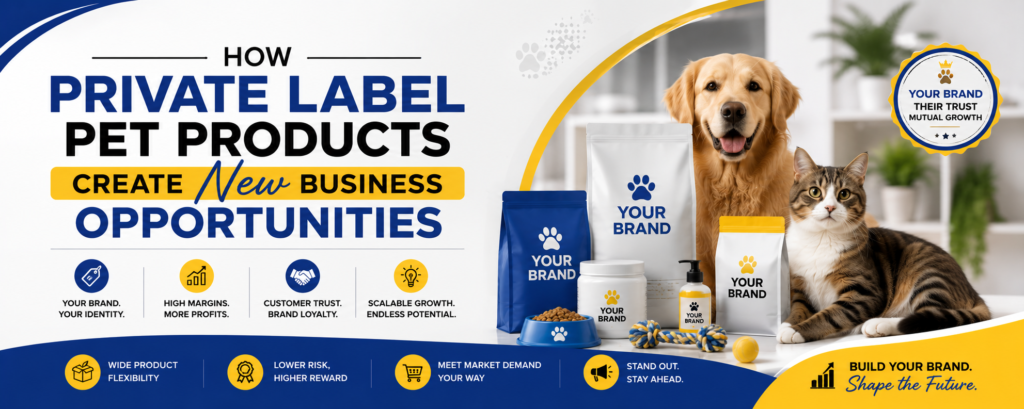
Private label has become one of the most attractive growth models in modern retail, and the pet category is no exception. As the pet market becomes more organized and competitive, businesses are looking for ways to improve margins, build exclusivity, and offer better value to customers. This is where private label pet products create major opportunities.
Private label means products manufactured by one company but sold under another company’s brand name. In the pet industry, this can include treats, grooming products, accessories, supplements, bowls, beds, toys, and more. For retailers and distributors, private label creates the chance to build a unique product line that competitors cannot easily copy.
One of the biggest advantages of private label is margin control. Compared with reselling third-party brands, private label often allows businesses to structure pricing more strategically. This can result in healthier margins and greater control over promotions.
Exclusivity is another major benefit. In a competitive market, many stores and sellers offer the same brands. Private label helps a business stand out by offering products that are only available through its own network. This strengthens brand identity and improves customer retention.
Private label also supports better category building. A retailer or distributor that understands customer demand can create products based on real buying patterns. For example, if customers are looking for affordable grooming products, premium feeding bowls, or natural treats, a business can develop its own line specifically for that need.
For manufacturers, private label is also a strong business opportunity. It opens access to retailers, chains, marketplaces, and businesses that want branded products without building a manufacturing facility. As the Indian pet market expands, more retailers and sellers are exploring such partnerships.
NOTE*
IIPTF helps retailers, suppliers, and manufacturers explore private label opportunities by connecting the pet industry through a powerful B2B trade platform.
However, successful private label development requires careful partner selection. Businesses should look for manufacturers with stable production quality, transparent processes, packaging flexibility, and the ability to meet delivery schedules. Product consistency matters greatly because the business’s own brand name is attached to the final product.
Packaging and positioning are especially important in private label. The product should not feel generic. It should reflect the target customer, the intended shelf placement, and the desired price segment. A good private label line looks credible, consistent, and relevant to customer demand.
Private label works especially well in selected categories. Accessories, bowls, leashes, grooming products, travel items, and selected treats often offer strong entry points. Over time, a business can expand into more specialized lines depending on demand and capability.
Pet B2B Trade fairs are useful for private label development because they bring manufacturers, suppliers, retailers, and sourcing professionals together in one place. Businesses can compare quality, discuss customization, understand MOQ expectations, and build relationships face-to-face. This is much faster and more efficient than relying on scattered sourcing conversations.
The future of the pet industry will not be built only by national brands. It will also be shaped by businesses that create focused, profitable, and differentiated product lines of their own. Private label gives them that opportunity.
FAQs
What are private label pet products?
They are products made by a manufacturer but sold under another company’s brand name.
Which pet categories are good for private label?
Accessories, treats, grooming items, and selected wellness products are common starting points.
