


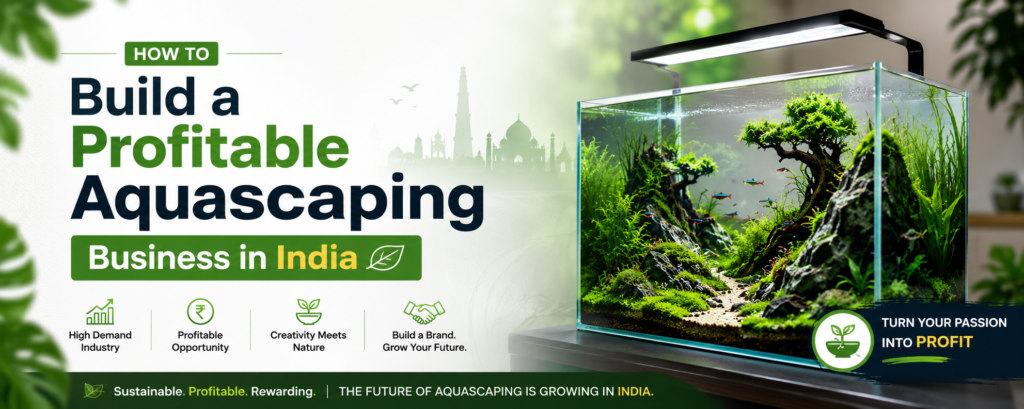
Transitioning from a hobbyist to a professional aquascaper requires a strategic understanding of business models, client acquisition, and market dynamics. This guide provides a comprehensive roadmap for monetizing aquascaping skills in the Indian market, detailing everything from pricing strategies and equipment sourcing to securing corporate maintenance contracts. Readers will gain actionable insights to establish a profitable aquascaping enterprise and learn how industry events like Aquagic at IIPTF can accelerate their business growth.
Key Takeaways
- Multiple revenue streams exist for professional aquascapers, including custom installations, monthly maintenance contracts, and equipment retail.
- Corporate and commercial installations offer the highest profit margins but require reliable, ongoing maintenance agreements.
- Sourcing high-quality hardscape materials and specialized aquatic plants remains a primary challenge in the Indian market, requiring strong supplier networks.
- Transparent pricing structures and a professional portfolio are essential for converting interior designers and high-net-worth individuals into clients.
- Attending industry events like the 7th Aquagic 2026 provides vital networking opportunities with B2B suppliers, global brands, and potential clients.
Why is the aquascaping market growing rapidly across India?
The aquascaping market in India is expanding swiftly due to rising disposable incomes, rapid urbanization, and a growing appreciation for biophilic interior design. High-net-worth individuals and corporate entities increasingly view custom planted aquariums as premium decor elements that bring nature indoors.
This shift transforms aquascaping from a niche pet hobby into a lucrative design industry. Interior designers actively seek out skilled aquascapers to integrate living art into luxury homes, boutique hotels, and modern office spaces. Furthermore, the psychological benefits of observing aquatic life align perfectly with the rising corporate focus on employee well-being and stress reduction. As a result, professional aquascapers find themselves uniquely positioned at the intersection of the pet industry, interior design, and wellness.
What are the most profitable business models for Indian aquascapers?
Professional aquascapers in India maximize their revenue by diversifying their service offerings across installation, maintenance, and retail. Relying on a single income stream limits growth, so successful businesses combine upfront design fees with recurring revenue models.
Custom Design and Installation for Residential and Commercial Spaces
Custom design and installation serve as the primary income source for most professional aquascaping businesses. Aquascapers charge a comprehensive fee to conceptualize, source, and build a tailored aquarium setup. Residential clients usually request community tanks that serve as living room centerpieces. Commercial clients, such as restaurants and clinics, prefer large, high-impact displays. Profitability in this model depends on accurate cost estimation and efficient sourcing of hardscape materials, plants, and technical equipment.
Maintenance Contracts and Monthly Retainers
Maintenance contracts provide the financial stability necessary to sustain an aquascaping business. Planted tanks require precise trimming, algae management, water testing, and fertilizer dosing. Most clients lack the time or expertise to perform these tasks. Aquascapers secure monthly retainers by offering weekly or bi-weekly servicing. This recurring revenue model covers basic operational costs and ensures the business remains profitable even during months with fewer new installations.
Competition and Exhibition
Competing in national and international aquascaping contests builds prestige and brand authority. While the direct financial rewards of winning competitions can be modest, the indirect benefits are substantial. High rankings in recognized contests serve as powerful marketing tools. Award-winning aquascapers can command premium rates for their designs and easily attract high-end clientele who want a recognized master handling their installations.
Content Creation and Educational Courses
Content creation offers a highly scalable business model for skilled aquascapers. Professionals monetize their expertise by starting YouTube channels, publishing tutorials, or selling comprehensive online courses. This approach captures the attention of the vast hobbyist market. Monetization occurs through ad revenue, brand sponsorships, and paid course enrollments. Additionally, a strong online presence functions as an interactive portfolio that attracts both local installation clients and international recognition.
Equipment and Plant Retail
Retailing specialized aquascaping equipment and rare aquatic plants allows professionals to capture revenue from the DIY hobbyist sector. Many aquascapers open boutique stores or e-commerce websites to sell high-end lighting, CO2 systems, specialized soils, and tissue-cultured plants. By leveraging their industry knowledge, professionals can curate a selection of premium products that standard pet shops typically overlook.
How can Aquascapers secure corporate and event installations?
Aquascapers secure corporate and event installations by partnering directly with commercial interior designers, architects, and event planners. These professionals constantly look for unique, high-end features to elevate their projects.
To penetrate this market, aquascapers must present themselves as specialized design contractors rather than standard pet retailers. This involves creating a B2B marketing strategy that highlights the aesthetic value and low-maintenance appeal of professional aquascapes. Aquascapers should prepare detailed pitch decks showing past corporate installations, emphasizing how these living displays improve air quality, reduce ambient stress, and serve as striking focal points in reception areas or boardrooms. For short-term event installations, businesses must develop modular, easily transportable setups that can be assembled and dismantled quickly without compromising the design’s visual impact.
How should professional aquascapers price their design services?
Professional aquascapers should price their services using a structured formula that accounts for material costs, labor hours, design complexity, and ongoing liability. Flat-rate pricing often leads to lost profits due to unforeseen complications.
Choose a cost-plus pricing model if you are starting out and need to ensure all basic expenses are covered. This involves calculating the total cost of the tank, stand, hardscape, plants, and equipment, then adding a standard markup percentage (typically 30% to 50%). To this total, add your hourly labor rate for the installation time.
For experienced aquascapers with strong portfolios, value-based pricing is significantly more profitable. This approach prices the project based on the perceived value to the client rather than just the cost of materials. High-end clients paying for a luxury interior design piece will accept premium pricing if the aquascaper delivers an exclusive, flawless product. Regardless of the model chosen, always require a deposit (usually 50%) before purchasing materials to protect your cash flow.
What is the best way to build a professional aquascaping portfolio?
The best way to build a professional aquascaping portfolio is to document a diverse range of high-quality tank setups using professional photography and videography. A strong portfolio visually communicates your expertise and artistic range to potential clients.
Start by creating three to five distinct layouts—such as an Iwagumi style, a dense Dutch style, and a natural driftwood-heavy Nature Aquarium. Document the entire process of each build, from the empty tank and initial hardscape placement to the fully grown-in result. High-resolution images of the matured tanks are critical. Create a clean, easy-to-navigate website to host these images, and use platforms like Instagram to share the progression shots. When pitching to commercial clients, provide a physical or digital lookbook that clearly explains the dimensions, themes, and maintenance requirements of your past projects.
Where should Indian professionals source aquascaping equipment?
Indian professionals should source their aquascaping equipment directly from authorized national distributors or by establishing wholesale accounts with international brands. Relying on retail pet stores eliminates the profit margins necessary to run a successful installation business.
The Indian market now features several reliable B2B distributors that import specialized brands focusing on CO2 equipment, high-output LED lighting, and active substrates. To access wholesale pricing, professionals must register their business formally and obtain a GST number. Attending B2B trade shows like the India International Pet Trade Fair (IIPTF) is the most efficient way to connect with these distributors. These events allow professionals to negotiate directly with manufacturers, compare product quality in person, and secure exclusive regional distribution rights for specific high-end brands.
How can hobbyists develop professional aquascaping skills?
Hobbyists develop professional aquascaping skills by transitioning from trial-and-error methods to structured learning and scientific water chemistry management. Professionalism requires consistency, which comes from understanding the underlying biology of aquatic ecosystems.
Skill development should focus on three core areas: hardscape composition, plant biology, and technical troubleshooting. Hobbyists must study traditional art concepts like the golden ratio, focal points, and depth perception to create visually striking hardscapes. Furthermore, professionals must master the relationship between lighting intensity, CO2 injection rates, and nutrient dosing to prevent algae outbreaks. Attending masterclasses, participating in local aquarium society workshops, and studying the techniques of international grand champions are highly effective pathways to elevate one’s skill set from amateur to professional grade.
What specific challenges do aquascapers face in the Indian market?
The primary challenge for aquascapers in the Indian market is managing extreme climate variations and regional water quality issues. High ambient temperatures during Indian summers necessitate the use of expensive aquarium chillers to maintain the cool water parameters that delicate aquatic plants require.
Additionally, many Indian cities supply hard tap water with high total dissolved solids (TDS) and elevated pH levels. This environment is hostile to sensitive flora, requiring professionals to install reverse osmosis (RO) systems for almost all high-end client setups.
Supply chain inconsistency presents another significant hurdle. The availability of high-quality rocks, specialized driftwood, and rare tissue-cultured plants can fluctuate. Successful Indian aquascapers mitigate this by maintaining their own holding tanks and cultivating their own rare plant stock, ensuring they always have the necessary materials for sudden client requests.
How does Aquagic at IIPTF 2026 support the aquascaping industry?
Aquagic at IIPTF 2026 supports the aquascaping industry by providing the largest dedicated B2B platform in the Indian subcontinent for aquarium professionals, brands, and buyers to connect. Scheduled for August 29th and 30th at Bharata Mandapam, this event centralizes the fragmented aquatic trade sector.
Aquagic showcases the latest innovations in aquarium technology, filtration systems, and specialized aquascaping products. For professional aquascapers, the event serves as a crucial networking hub to secure wholesale supplier agreements, meet international equipment manufacturers, and discover new product lines before they hit the retail market. The event also hosts knowledge seminars and masterclasses, elevating the overall standard of the Indian pet and aquarium industry.
What are the standard rates for aquascaping services in India?
Aquascaping service rates in India vary significantly based on the tank size, design complexity, and the professional’s reputation. The table below outlines estimated baseline pricing for standard professional services, providing a framework for new businesses to structure their fees.
| Service Type | Description | Estimated Pricing (INR) |
| Initial Consultation | Site visit, space assessment, and preliminary design discussion. | ₹1,500 – ₹5,000 (Often credited toward final build) |
| Custom Installation (Small) | Tanks up to 60cm. Includes design, hardscaping, and planting (excluding material costs). | ₹10,000 – ₹25,000+ |
| Custom Installation (Large) | Tanks 90cm to 120cm+. Intricate designs for commercial spaces (excluding material costs). | ₹35,000 – ₹1,00,000+ |
| Monthly Maintenance | Weekly or bi-weekly visits for water changes, trimming, and equipment checks. | ₹4,000 – ₹15,000 / month |
| Complete Tank Overhaul | Tearing down an old setup and creating a new aquascape layout. | Priced similarly to a new custom installation. |
Note: The above figures are industry estimates. Material costs for tanks, lights, CO2, and plants are billed additionally based on wholesale plus markup. This is just for ideation.
Frequently Asked Questions (FAQs)
How much capital is required to start an aquascaping business in India?
Starting a service-based aquascaping business requires minimal initial capital, typically between ₹50,000 and ₹1,00,000. This budget covers professional tools, business registration, a basic website, and materials to build two or three high-quality portfolio tanks. Capital requirements increase significantly if you plan to open a physical retail storefront.
How long does it take to complete a professional aquascaping installation?
A standard residential aquascaping installation takes one to two days of active on-site work. However, the complete process—including client consultation, material sourcing, hardscape preparation, and the initial cycling phase to stabilize the water—typically spans three to six weeks.
What are the main risks associated with maintaining aquariums for corporate clients?
The primary risk is livestock loss or severe algae outbreaks damaging the aesthetic appeal of the tank, which can lead to canceled contracts. Equipment failure, such as a leaking canister filter or a malfunctioning CO2 regulator, can also cause water damage to corporate property. Professionals mitigate these risks by using high-grade equipment, conducting rigorous weekly maintenance, and carrying appropriate business liability insurance.
Are there alternatives to fully planted high-tech tanks for clients with lower budgets?
Yes. Choose low-tech setups featuring hardy plants like Anubias, Java Fern, and Cryptocoryne if the client has a limited budget for equipment and maintenance. These setups do not require expensive CO2 injection systems or high-intensity lighting, making them much more affordable to install and easier to maintain long-term.
Who is the ideal target audience for luxury aquascaping services?
The ideal target audience includes commercial real estate developers, boutique hotel owners, dental and medical clinics, and high-net-worth homeowners. These demographics value high-end aesthetics, understand the cost of custom design work, and have the recurring budgets required for professional monthly maintenance.
Take your aquascaping business to the next level at Aquagic 2026
Transitioning from a passionate hobbyist to a successful business owner requires continuous learning, strategic networking, and access to premium suppliers. The Indian market holds immense untapped potential for aquascapers who treat their craft with professional rigor.
To position your business at the forefront of this booming industry, you must connect with the right people and products.
Register as a visitor or book a stall for the 16th India International Pet Trade Fair & 7th Aquagic 2026, taking place on the 29th and 30th of August at Bharata Mandapam, New Delhi. Learn from master aquascapers, discover the latest global products, and network with industry leaders to scale your aquascaping enterprise.
