


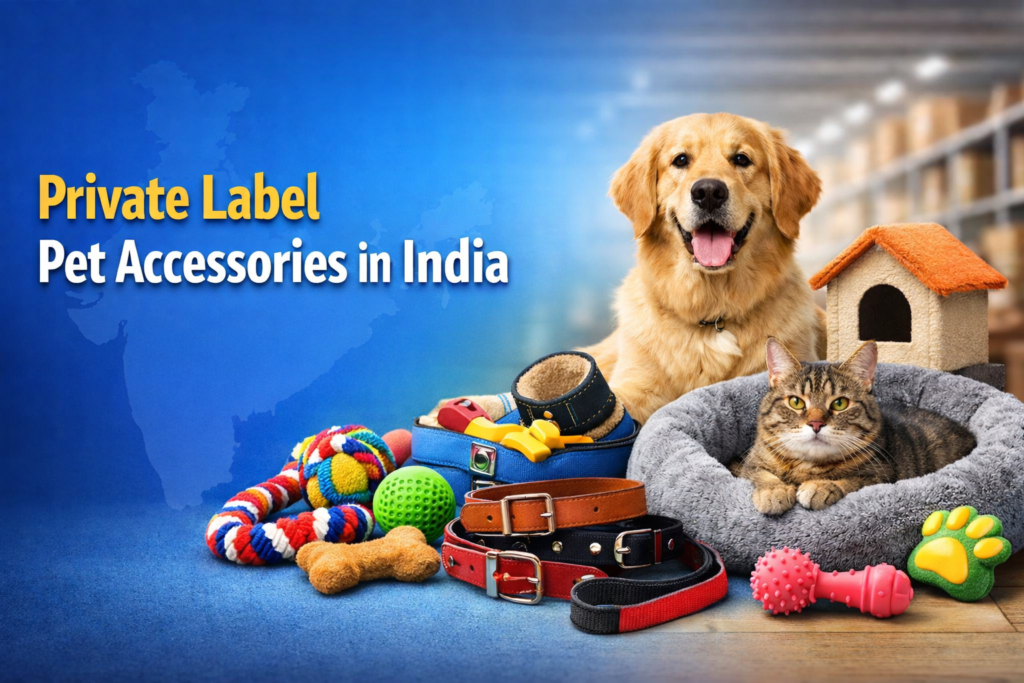
Private label pet accessories in India are a strong opportunity for retailers, distributors, e-commerce brands, and export-focused businesses. Accessories are easier to brand than many other pet categories because design, packaging, materials, and presentation all influence buying decisions. That gives businesses room to create a recognizable product line without entering the most crowded nutrition categories first.
Still, private label works only when sourcing is handled carefully. Many buyers see a trendy product, place a small order, and then struggle with quality inconsistency, weak packaging, or poor repeatability. The better approach is to treat private label as both a brand decision and a supply-chain decision.
1) Choose a focused category first
Before contacting manufacturers, define your lane. Are you building a fashion-led line, a durable utility line, a premium gifting range, or a retailer-owned essentials brand? Will you focus on collars and leashes, bedding, toys, travel gear, or a small but coherent mix?
Clarity here saves time later. The best manufacturer for fabric beds may not be the best for molded toys. A supplier strong in leather or nylon walking gear may not be ideal for plush products. Narrowing the first category helps you compare vendors on the right criteria.
2) Decide what makes your line different
A private label range should not feel like a copied catalog. Think about your customer and buying channel. Are you targeting value-driven pet stores, premium urban buyers, gifting, or online impulse purchases? Your answer shapes colors, materials, pack size, branding style, and pricing.
Some brands grow by owning one niche, such as walking gear or travel accessories. Others build a wider range slowly. Either approach can work if the products feel connected by one clear identity.
3) Evaluate manufacturers for capability, not just price
The wrong supplier usually reveals itself after the first order, not before it. That is why you must look beyond unit cost. Ask about material sourcing, production capacity, development timelines, quality checks, branding options, and repeat-order lead times.
Sampling is essential. Test stitching, hardware, finish, print quality, shape retention, zipper strength, and comfort. If you are sourcing beds or apparel, check washability and filling quality. If you are sourcing toys, think about intended use, durability expectations, and safety presentation. A good sample should feel close to retail-ready, not like a rough prototype.
4) Discuss MOQs, packaging, and branding together
Many buyers negotiate price first and packaging later. That creates confusion because a sellable private label product includes more than the item itself. Hang tags, labels, insert cards, barcodes, boxes, and master-carton quality all affect final cost and brand perception.
Ask how minimum order quantities work across colors, sizes, and styles. A low MOQ on paper can still become expensive if variant planning is poor. It is also wise to confirm sample costs, development charges where relevant, repeat-order pricing, and timeline changes at higher volumes.
5) Build a brand system, not random products
Strong accessory brands feel consistent. The naming, packaging, tone, color language, and sizing logic should work across the whole line. If someone buys a leash today and a bed later, the brand should still feel familiar.
This is where long-term value is created. A good-looking single product may sell once. A connected collection can create repeat purchase, better merchandising, and stronger retailer confidence. Collections such as city walk, outdoor utility, minimalist home, or puppy starter can help buyers understand the brand quickly.
6) Protect margins with quality control
Bulk production is where profits are protected or lost. Set clear expectations for stitching strength, measurements, finish, logo placement, labeling accuracy, and packaging defects. Do not assume that a strong first sample guarantees a strong final order.
It helps to use a simple pre-production and final-inspection checklist. The more repeatable your quality process becomes, the easier it is to grow into larger orders, new channels, and better pricing.
7) Why trade events matter for private label
Private label sourcing becomes easier when you can compare multiple manufacturers face to face. Trade events let buyers review materials, discuss MOQs, compare packaging options, and evaluate whether a supplier is serious enough for long-term business. That is far faster than trying to build a brand through scattered vendor conversations alone.
Final takeaway
Private label pet accessories in India can become a high-margin growth engine when the category is focused, the supplier is reliable, and the brand system is clear. Start small, test carefully, control packaging quality, and build for repeatability instead of chasing a one-time launch.
FAQs
Which categories work best for private label pet accessories?
Collars, leashes, harnesses, beds, toys, travel accessories, and apparel are all strong options when the branding and quality are consistent.
What matters more: price or reliability?
Reliability matters more over time because inconsistent quality or delays can damage both margins and brand trust.
How can I build authentic pet business network and connect with key pet business owners for my business growth?
You can book your stall or visit as business visitor to IIPTF, India’s biggest pet trade fair event. IIPTF is Pet B2B (Business-to-Business) exhibition. That allows pet business owners to build and connect with authentic people from the pet industry.
How can buyers avoid overstock in private label?
Start with a focused range, control variants carefully, and expand only after real demand becomes visible.
