


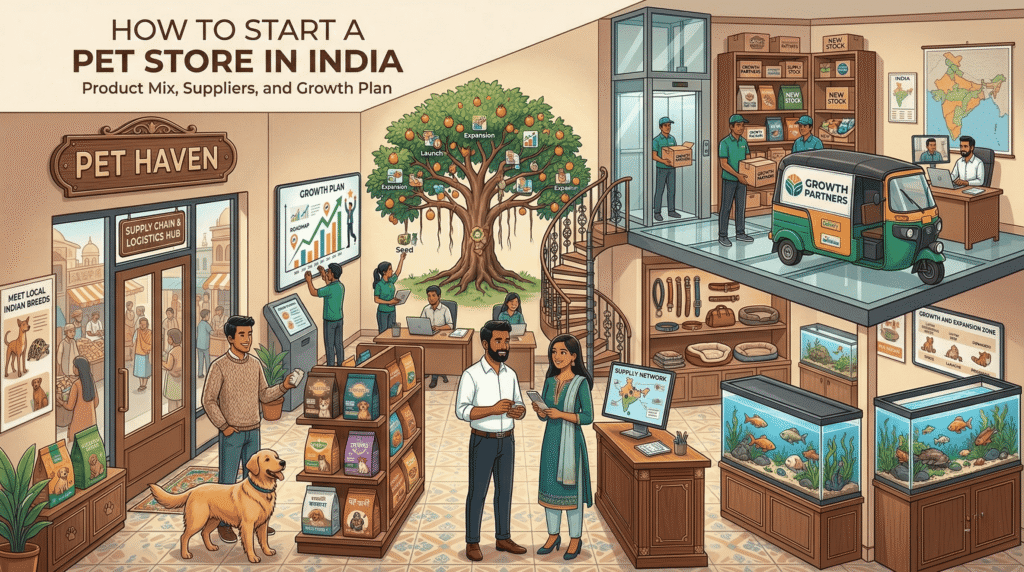
If you want to start a pet store in India, build it like a repeat-purchase retail business, not a hobby shop. The strongest stores do not win because they stock everything. They win because they choose the right categories, buy from reliable suppliers, and become the most trusted local place for pet essentials. With pet care becoming more organized and premium, there is room for stores that combine smart assortment with neighborhood trust.
1) Pick the right store model first
Before buying inventory, decide your model. A neighborhood essentials store focuses on food, treats, litter, hygiene, and basic accessories. A premium boutique adds specialized nutrition, grooming, supplements, bedding, and imported lines. A hybrid model combines a physical store with WhatsApp ordering, Instagram discovery, and local delivery.
For most new entrepreneurs, the hybrid model is the safest. It gives you walk-in sales plus repeat orders without needing a heavy e-commerce setup on day one.
2) Build your opening assortment around repeat demand
Your first buying plan should center on categories that bring customers back every month. Start with food, treats, litter, shampoo, hygiene products, bowls, collars, leashes, and a carefully chosen toy range. These are practical, understandable categories that support repeat buying and easy cross-selling.
Avoid the temptation to open with too many slow-moving items. It is better to have depth in proven products than random variety. If your area has more first-time pet parents, create puppy and kitten starter shelves. If your area is more premium, add better nutrition, grooming, and wellness products gradually.
3) Choose suppliers for consistency, not just price
Your supplier network shapes your margins, freshness, and reputation. The cheapest seller is rarely the best partner. Look for vendors who provide genuine products, GST billing, dependable lead times, stable stock availability, and clear return or replacement policies.
For food and consumables, check manufacturing dates, shelf life, and packaging condition. For accessories, check finish quality, stitching, hardware, and packaging presentation. It is smart to have one set of vendors for high-demand brands and another set for niche categories or better-margin private label lines.
4) Design the store to increase basket size
Shelf layout affects sales more than most new store owners expect. Put fast-moving essentials where buyers can find them quickly. Use eye-level space for best sellers and premium upgrades. Create simple zones like puppy essentials, cat basics, grooming corner, and walking accessories.
Bundling helps increase average order value. Pair food with treats, shampoo with brushes, or harnesses with poop bags. These combinations feel helpful, not pushy, especially for new pet parents who want quick guidance.
5) Track margins and stock turn from month one
A pet store can look busy and still struggle if inventory is poorly managed. Food brings repeat customers, but accessories and private label often improve margins. You need both. Review your fast, medium, and slow-moving products every month. Reorder proven lines often and reduce exposure to slow stock quickly.
Do not measure performance by daily sales alone. Watch average bill value, repeat buyers, category contribution, and dead stock. These numbers tell you whether the store is actually becoming stronger.
6) Win your local market before you think about scale
A successful pet retail business grows through trust. Staff should ask simple questions before recommending products: puppy or adult, dog or cat, sensitive skin, picky eater, first-time owner, indoor lifestyle, or active breed. That makes the conversation useful and improves conversion.
Your local marketing should stay simple. Set up a clean Google Business Profile, post real products on Instagram, offer WhatsApp ordering, and create reminder lists for food and litter customers. Small systems like refill reminders and loyalty rewards can drive repeat business surprisingly fast.
Common mistakes to avoid
New stores often buy too much inventory, ignore cats and grooming, or depend on one supplier for everything. Another mistake is treating offline and online as separate worlds. Today, local customers discover on social, ask on WhatsApp, and buy in store or through delivery. Your business should support that behavior from the beginning.
Final takeaway
If you want to start a pet store in India, focus on repeat demand, disciplined buying, supplier quality, and local trust. The winning store is not the one with the most products. It is the one that understands what customers buy repeatedly and how to keep them coming back.
That is also why trade events matter. They help retailers discover new categories, compare suppliers, and build stronger buying relationships before the competition does.
Note: As a major B2B pet trade platform, IIPTF helps businesses expand their reach, understand market trends, and connect with the right buyers and partners. You can register as pet business to book a stall where you can showcase your product/services etc; or you can visit as a business to connect with Industry experts.
FAQs
What should a new pet store stock first?
Food, treats, litter, grooming, hygiene, bowls, collars, leashes, and a curated toy range are the best starting categories.
Should a new pet store sell online?
Yes, but a simple local model such as WhatsApp ordering plus Instagram is often enough in the beginning.
How can a pet store improve margins?
Balance repeat categories like food with higher-margin categories such as accessories, grooming, and selective private label products.
